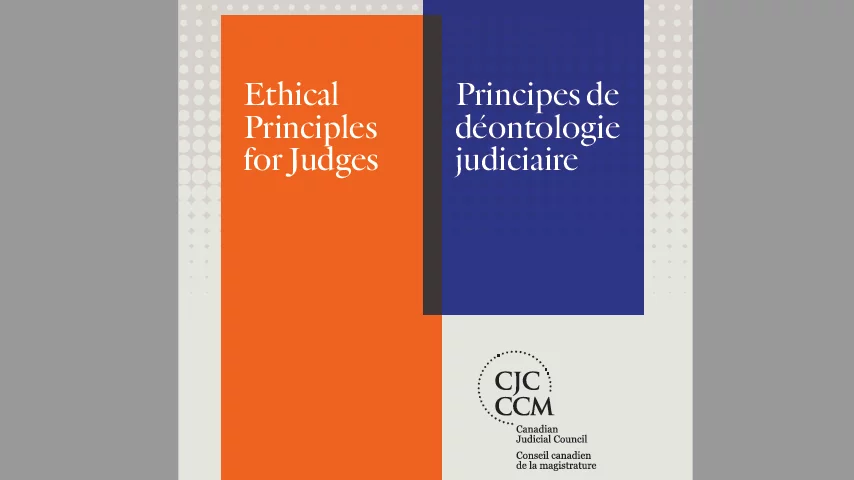
The Canadian Judicial Council has published a modernized edition of its Ethical Principles for Judges, a foundational document for federally appointed judges. This revision, produced after four years of consultation including public input, is the first since 1998 and introduces specific guidelines addressing judges use of technology and social media.
This development follows earlier discourse on whether the ethical duty of technology competence applicable to lawyers in many jurisdictions should also extend to the judiciary. While this has not yet occurred in the United States, the newly revised Canadian principles mark a significant shift.
The Duty of Technology Proficiency
The 72 page bilingual document frames the guidance on technology within the section outlining principles for diligence and competence. Similar to how the duty of technology competence for US lawyers derives from the comments to Model Rule 1.1 on competence, the Canadian reference is contained in the commentary under a subsection titled Professional Development.
Comment 3.C.5 explicitly states:
“Judges should develop and maintain proficiency with technology relevant to the nature and performance of their judicial duties.”
This urging appears to set a strong standard. Unlike the US lawyers duty to simply keep abreast of “the benefits and risks associated with relevant technology,” the Canadian guidelines encourage judges to actively “develop and maintain proficiency.”
Navigating Social Media Use
The principles offer more detailed guidance regarding judges use of social media. Generally, Comment 2.A.5 advises judges to exercise caution in their online presence. Furthermore, Comment 4.B.2 cautions against social media activities that could be seen to reflect negatively on a judges commitment to equality.
Section 5, which addresses the principles of judicial impartiality, includes an entire subsection of commentary specifically dedicated to social media (Comments 5.B.15-5.B.18). The guidelines do not prohibit judges from using social media but emphasize the importance of awareness regarding how their online activities may reflect upon themselves and the entire judiciary.
The commentary includes a clear warning about the speed and reach of online communication:
“Comments or images intended for a limited audience can be shared, almost instantaneously, with a vast audience and may create an adverse reaction far beyond what one may have considered possible.”
Judges are urged to be mindful that their statements on social media could be perceived by others as indicating bias or a lack of impartiality. Consequently, the guidelines state that judges who choose to use social media must “exercise great caution in their communications and associations within these networks.”
To mitigate risk, the guidelines advise judges to inform themselves about the proper use of security and privacy settings on social media platforms. Beyond their own posts, the document instructs judges to be vigilant about receiving information through social media that might relate to matters currently pending before the court. Should this occur, judges must consider the potential fairness issues that may arise.
Technology as a Core Judicial Issue
In his foreword to the revised principles, Richard Wagner chief justice of Canada and chair of the Canadian Judicial Council, noted that the update was intended partly to “explore new and emerging issues relevant to our modern times.”
It is undeniable that technology is now a core aspect of judicial work. As previously discussed in Human&Legal, technology influences court operations dockets and the physical courtrooms. Increasingly the substantive and evidentiary issues judges must rule on implicate technological matters.
It is hoped that those responsible for setting ethical standards for judges in the United States will recognize this imperative and follow the Canadian example by instituting a clear duty of technology competence for their judiciary. The events of recent years demonstrate that this is a necessary development.