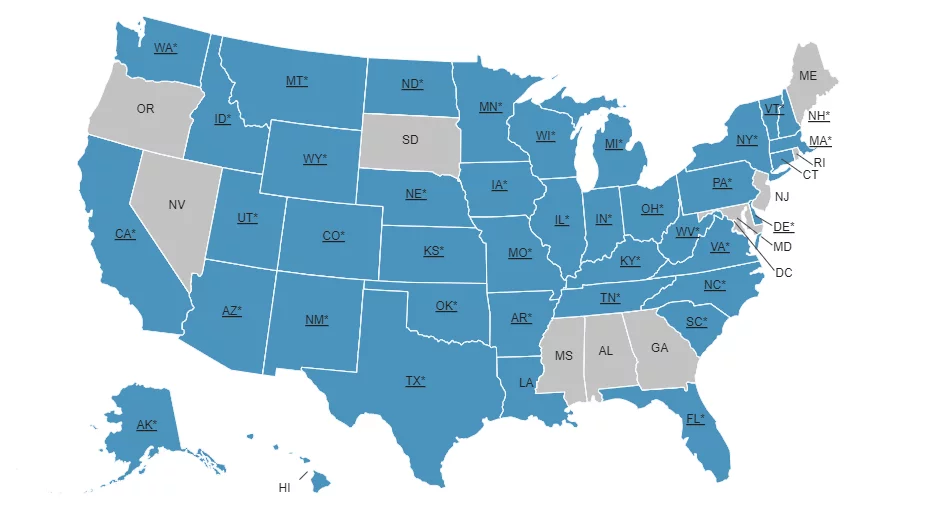
The movement requiring attorneys to maintain technological competence continues its steady expansion. Hawaiʻi has become the 40th state to adopt this ethical duty for lawyers, marking the first such adoption reported by Human&Legal in a year.
Effective January 1, 2022, the Hawaiʻi Supreme Court issued an order on August 18, 2021, to revise the state’s Rules of Professional Conduct. The key revision modifies Comment 6 to Rule 1.1, which addresses competence, to incorporate the duty of technology competence.
The updated comment now reads:
Maintaining Competence To maintain the requisite knowledge and skill, a lawyer should engage in continuing study and education and keep abreast of changes in the law and its practice, including the benefits and risks associated with relevant technology. See comments [18] and [19] of Rule 1.6.
The Supreme Court’s order also implemented an amendment to Rule 5.3, titled “Responsibilities Regarding Nonlawyer Assistants.” Comment 2 to this rule was revised to explicitly mention the role of technology in a lawyer’s responsibilities:
Paragraph (a) requires lawyers with managerial authority within a firm to make reasonable efforts to establish internal policies and procedures designed to provide reasonable assurance that nonlawyers in the firm will act in a way compatible with the Rules of Professional Conduct. Reasonable efforts should include careful consideration of the use of technology and office resources connected to the internet, external data sources, and external vendors providing services relating to client data, and the use of client data.
The foundational shift toward mandating technology competence began in 2012 when the American Bar Association (ABA) formally approved changes to the Model Rules of Professional Conduct. The ABA’s House of Delegates voted to amend Comment 8 to Model Rule 1.1 to clarify that lawyers possess a duty to be competent in technology, alongside the law itself.
The ABA Model Rule language, which has served as the basis for most state adoptions, states:
Maintaining Competence To maintain the requisite knowledge and skill, a lawyer should keep abreast of changes in the law and its practice, including the benefits and risks associated with relevant technology, engage in continuing study and education and comply with all continuing legal education requirements to which the lawyer is subject. (Emphasis added.)
In the decade since the ABA’s action, 40 jurisdictions have adopted some version of this critical duty, recognizing the essential role technology plays in modern legal practice. Human&Legal tracks the ongoing adoption of this standard across the United States.