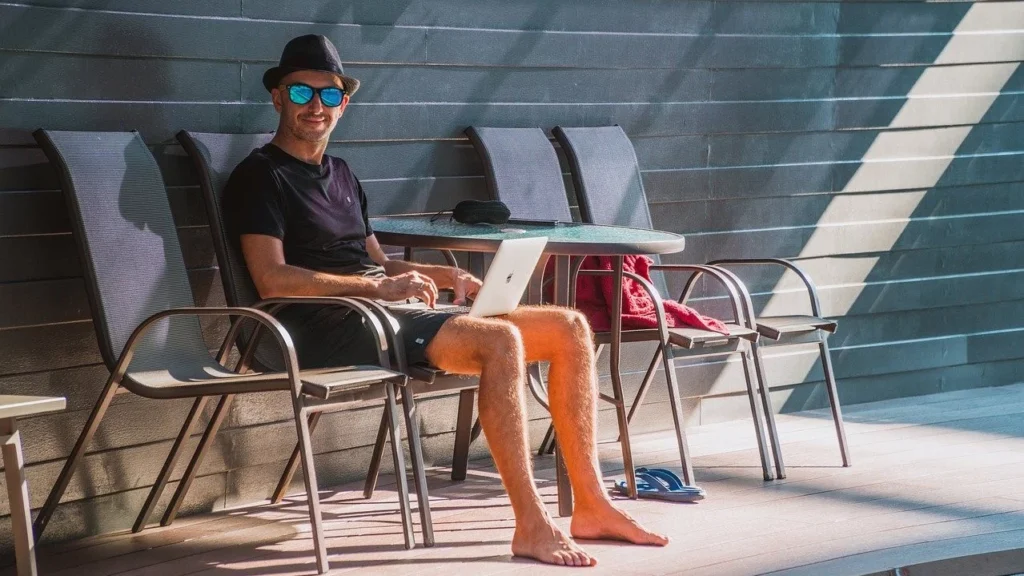
In the contemporary landscape of remote work, a growing number of attorneys have chosen to relocate their home offices to more appealing destinations, frequently moving out of state to utilize residences in locations featuring agreeable weather and proximity to the coast.
Florida has emerged as one such attractive destination for many legal professionals. A recent decision from the Florida Supreme Court now offers definitive guidance regarding the ethical propriety of an attorney licensed elsewhere practicing law remotely from within the Sunshine State.
The decision, issued on February 17, is titled In Re: Amendments to Rule Regulating the Florida Bar 4-5.5. It effectively incorporates into Florida’s rules of professional conduct the principles previously established by an earlier ethics opinion.
That preceding ethics opinion addressed the situation of Thomas Restaino, a New Jersey attorney. Mr. Restaino was working from his Florida home for a New Jersey law firm, focusing exclusively on federal intellectual property matters. In May 2021, the Supreme Court adopted an advisory opinion proposed by The Florida Bar which concluded that Mr. Restaino’s professional activities did not constitute the unlicensed practice of law.
Following the adoption of that advisory opinion, the Supreme Court requested The Florida Bar to consider amending the state’s professional conduct rules. The aim was to specifically delineate the circumstances under which an attorney licensed in another jurisdiction may work remotely while physically located in Florida. The Bar subsequently proposed rule changes, which the Supreme Court formally adopted in its opinion last week.
The primary modification involves the comment accompanying Rule 4-5.5 of the Rules of Professional Conduct, which addresses the unauthorized practice of law. Under the existing rule, an attorney who is not admitted in Florida is considered to be engaged in unauthorized practice if that attorney establishes an office or maintains a regular presence for the practice of law within the state.
The amendment approved by the court adds specific language to the comment to clarify the position of an attorney working remotely:
For purposes of this rule, a lawyer licensed in another United States jurisdiction does not have a regular presence in Florida for the practice of law when the lawyer works remotely while physically located in Florida for an extended period of time if the lawyer works exclusively on non-Florida matters, and neither the lawyer nor any firm employing the lawyer holds out to the public as having a Florida presence. See Fla. Bar re Advisory Opinion—Out-of-State Att’y Working Remotely from Fla. Home, 318 So. 3d 538 (Fla. 2021).
Florida’s stance on attorneys working remotely aligns with the approaches taken by various other states that have formally considered this matter. Human&Legal has previously summarized several of these developments in a prior publication: Pandemic-Related Legal Ethics Opinions: A Compendium.
This clarification provides certainty, confirming that attorneys licensed outside of Florida may ethically continue their exclusive non-Florida practice while working remotely from within the state.